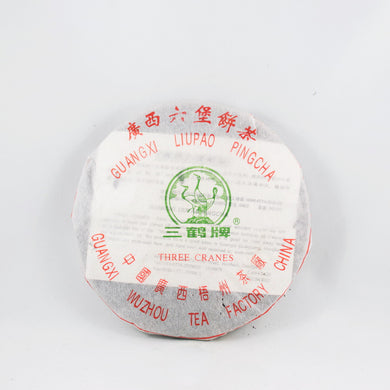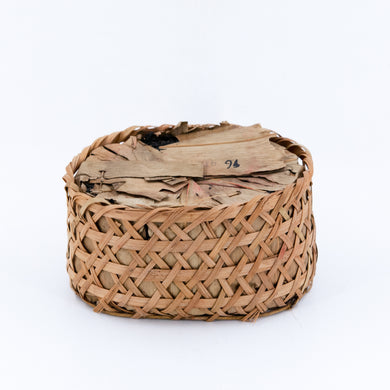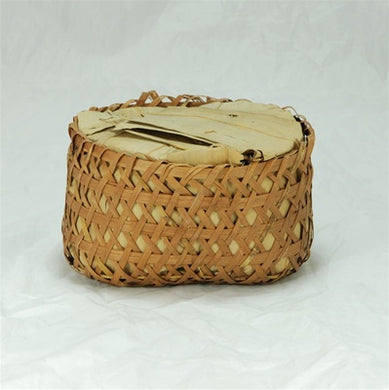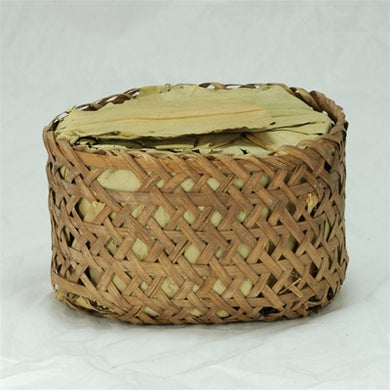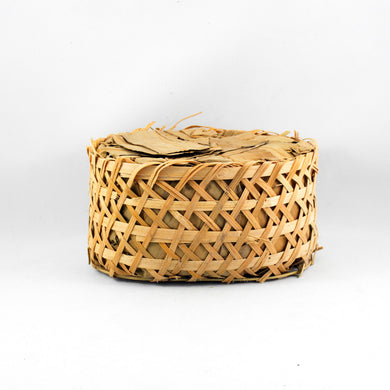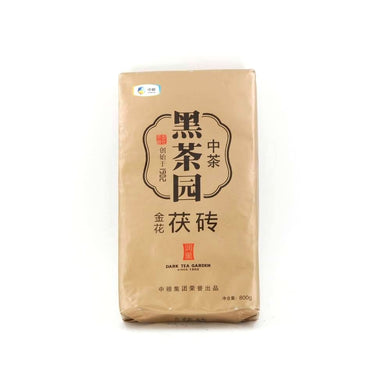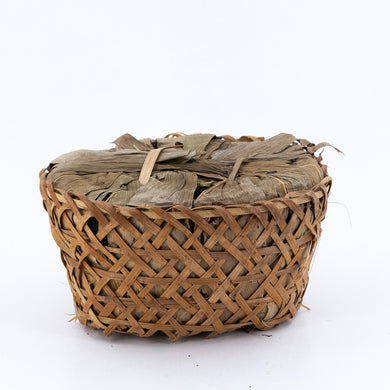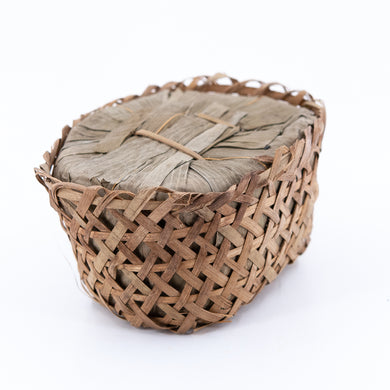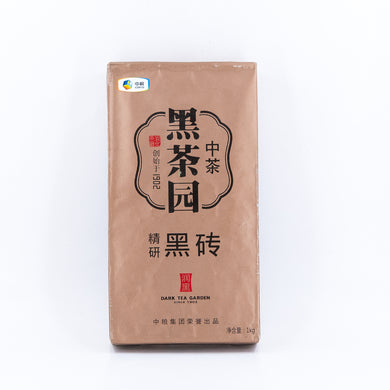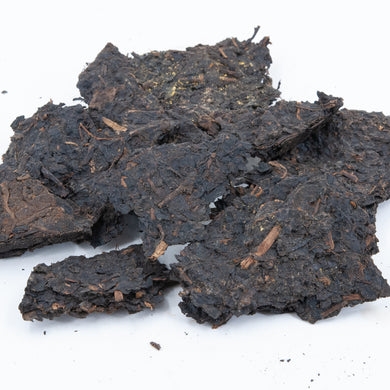



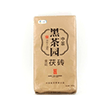
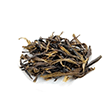
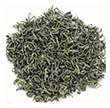
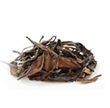
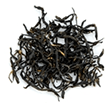


1980's Guangxi Liu Bao Loose Leaf Tea (Basket)


This 1980s Liu Bao tea was produced using traditional factory methods, relying on time, environment, and natural microbial activity. It has been aged for decades in a bamboo basket undergoing an exceptionally slow and graceful transformation that softens its rough edges.
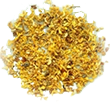
This Liu Bao made from small- to medium-sized leaves. After a long period of properly stored, it naturally develop" Golden Flowers, which are regarded as one of the signs of maturity and successful aging.
The tea brews into a clear, luminous liquor of deep reddish-brown color. It offers notes of aged wood, dried herbs, and a distinctive betel nut nuance, with a warm, cellar-like depth that speaks of long years in traditional storage.
This tea tastes sweet and mellow. Most initial bitterness has been smoothed by time, replaced by a gentle, honeyed warmth that spreads through the mouth and lingers in the throat. It has an earthy tone with a soothing, medicinal richness. The body is full yet supple, with a soft, enveloping mouthfeel that invites slow, contemplative drinking.
This 1980s Liu Bao reflects the beauty of patient aging with balanced, enduring, and deeply comforting. It offers immediate approachability while retaining the depth and resonance that only long decades of natural transformation can provide.
Discover Liu Bao Tea
Liu Bao tea originates from Guangxi Province, specifically from Liubao Village in Cangwu County, Wuzhou City. Its history dates back 1500 years, gaining prominence in the 18th century as one of the top 24 famous Chinese teas. Traditionally, it's been marketed primarily to Guangdong Province, Hong Kong, Macao, and Southeast Asian countries for both daily consumption and medicinal purposes.
As a post-fermented tea, Liu Bao is classified as "hei tea" in China and is known to improve in taste and value with age. A pivotal moment came around 1956 when the Wuzhou Tea Factory advanced the cold-water wet piling process, making it a benchmark for modern fermentation techniques. By 1958, this process was already enhancing Liu Bao tea, a significant 16 years before its application in Pu_erh tea production, earning Liu Bao the title "Father of Shou Pu-erh Tea.
Tea cellar and wooden dry warehouse play a crucial role in developing the traditionally flavor and taste. After completing the wet-piling process, Liu Bao tea is aged in cellar beneath the mountain, providing optimal conditions for microbial activity that enhances the tea. Five months later, the tea is transferred to wooden warehouse made of pine and fir, where it continues to age. The interaction between the tea and the wood infuses the tea with a woody or medicinal fragrance. This two-stage aging process in cellar and wooden warehouse is crucial for developing Liu Bao tea's distinctive "betel nut aroma" over time.
Golden Flower
Golden Flower refers to a beneficial fungus, primarily Eurotium cristatum (golden mycelium), which commonly appears in certain post-fermented dark teas, most famously in Fuzhuan tea. In well-aged Liu Bao tea, it may also develop naturally under suitable storage and aging conditions.
This microorganism is not a sign of spoilage or mold damage. Rather, it is a positive microbial characteristic formed during proper fermentation and maturation. Its presence is highly valued and often regarded as an indicator of quality and successful aging.
Golden Flower has been studied extensively over the past few decades. Research conducted by the Jishou University Institute of Food Science suggests that Eurotium cristatum may assist in the digestion and absorption of starch and protein while helping to reduce fat absorption.
In terms of sensory impact, Golden Flower contributes to improved texture and flavor, enhancing smoothness, sweetness, and overall harmony, while refining the aged character of the tea.
The Quick Way - 5 Easy Steps
Step 1
Rinse a teapot, small teacups and a small pitcher with hot water.
Step 2
Put one tablespoon of tea leaves in the teapot for every two people being served. Use more for large leaf tea or for a stronger taste.
Step 3
Place the tea leaves inside the teapot and pour in enough hot water to cover the leaves. Pour out the water immediately to rinse the leaves. Use to this chart for proper water temperatures.
|
Green Tea Silver Needle White Teas and most tea made from “tips” |
75C – 80C |
|
Taiwan Oolong Tips Red/Black Teas |
90C – 95C |
|
Black Teas Pu-Erh (Bow-Lay) Te Guan Yin (Iron Buddha) Da Hong Pao (Cliff Tea) Lapsang Souchong Phoenix Oolong Aged White Teas |
95C – boiling |
IMPORTANT NOTES:
- Too much or too little heat for the tea you are making will break down the leaves too quickly or too slowly and the flavour will be inconsistent. Temperatures can be approximate.
- *Boiling means when the water has just reached a slow boil with big bubbles. The Chinese call this “Fish-Eye Water”. For green tea, watch for small streams of tiny bubbles starting to rise from the bottom of the kettle. This is called “Crab-Eye Water”.
- For Oolong teas, the correct temperature is somewhere between these two. If you do not have a thermometer, let the water stand for 2 minutes or so after reaching a first boil to get 90 – 95C C / 194 – 203 F.
Step 4
Empty the teacups and pitcher. Pour enough hot water into the teapot again to cover the leaves. Wait 8 - 10 seconds and pour the tea into the pitcher and serve, a little longer for a stronger taste. For additional brews, repeat Step 4, deducting two seconds for the second brew and adding two seconds for each additional brew.
Step 5
As the aromatic compounds in the tea leaves dissolve in the water, you will notice the subtle flavours of the tea begin to change with each brew. You will be amazed at the difference! To make tea taste even better, try making tea using Gong Fu Cha method, the traditional Chinese art of tea-making.
The Traditional Way Using The Gong Fu Cha Method
You will need:
- Teapot - preferably a small Chinese Yixing teapot. These have the best heat handling properties for tea-making, as well as for developing the flavour. If you only have a large teapot, use the quantities of water as if a small teapot and tea shown on the charts.
- Small teacups (similar in size to Japanese sake cups) or tiny bowls
- Kettle
- Pitcher - small glass or porcelain
- Fine Strainer - to keep your tea clear and free of sediment
- Tea Tray - A cookie sheet or large flat dish lined with a towel can make a good tray to prepare your tea on.
Step 1 - Warm The Teapot and Pitcher, Sterilize The Teacups and Strainer
The first step is to use the right size of teapot for the number of people you are serving. Most teas taste best when made using a Yixing unglazed clay teapot. Use this chart for the correct size of teapot for the number of people you are serving (use this amount of water if you are using a larger teapot). Pour some hot water into the teapot, pitcher, teacups and over the strainer to rinse, warm and sterilize them.
|
Size of Teapot |
Volume (ml / fl oz) |
Number of People Served |
|
#1 size |
70 / 2.4 |
1 - 2 |
|
#2 |
100 / 3.4 |
2 - 4 |
|
#3 |
175 / 6.0 |
3 - 5 |
|
# 4 |
225 / 7.6 |
4- 6 |
Referring to this chart, determine the correct water temperature for the type of tea you are making. Too much or too little heat will break down the leaves too quickly or too slowly and the flavour will be inconsistent. Temperatures can be approximate.
|
Green Tea Silver Needle White Teas and most tea made from “tips” |
75C – 80C
|
|
Taiwan Oolong Tips Red/Black Teas |
90C – 95C |
|
Black Teas Pu-Erh (Bow-Lay) Te Guan Yin ( Iron Buddha) Da Hong Pao (Cliff Tea) Lapsang Souchong Phoenix Oolong Aged White Teas
|
95C – boiling |
* Boiling means when the water has just reached a slow boil with big bubbles . The Chinese call this “Fish-Eye Water”. For green tea, watch for small streams of tiny bubbles starting to rise from the bottom of the kettle. This is called “Crab-Eye Water”.
For Oolong teas, the correct temperature is somewhere between these two. If you do not have a thermometer, let the water stand for 2 minutes or so after reaching a first boil to get 90 – 97C C / 194 – 206 F.
Step 2 – Rinse The Tea Laves
Empty the teapot and pitcher of the warming water. Place the measured amount of tea into the teapot using this chart and fill with the proper temperature water from the chart above. When pouring water in, allow the water to overflow the top of the teapot until the bubbles disappear and the water runs clear.
|
Size |
Size of Leaves |
|||
|
Rolled Leaves |
Less than 1 cm / 3/8 inches |
1 – 2 cm |
2 - 4 cm |
|
|
#1 size |
0.5 - 1 |
0.5 - 1 |
1 – 1.5 |
1.5– 2 |
|
#2 |
1.5 - 2 |
1.5 - 2 |
2 – 2.5 |
2.5 – 3 |
|
#3 |
3 – 3.5 |
3 – 3.5 |
3.5 – 4 |
4 – 4.5 |
|
# 4 |
4 – 4.5 |
4 – 4.5 |
4.5 – 5 |
5 – 5.5 |
This chart shows the amount of tea to use (in number of tablespoons) based on the size of the tea leaves you are using and the size of teapot. Adjust for personal taste.
Replace the lid and immediately pour off all the water (or a bit longer if using compressed tea) and shake out the last drops. Then tilt the lid slightly open on the teapot. This allows the heat in the teapot to escape and not “cook” the leaves so they can retain their aroma
Step 3 –The First Brew
Fill the teapot until the water flows over the top. Place the lid on the teapot and count the proper number of seconds using this chart. Adjust times to taste.
|
|
Rolled Leaves |
Less than 1 cm / 3/8 inches |
1 – 2 cm |
2 - 4 cm |
|
Rinse the leaves |
4 - 8 seconds |
pour off the tea as quickly as possible |
1- 3 seconds |
2 - 4 seconds |
|
First Brew |
10– 15 seconds |
1 – 2 seconds |
9– 12 seconds |
12 – 15 seconds |
|
Second Brew |
8– 13 seconds |
2– 4 seconds |
8– 10 seconds |
10– 13 seconds |
|
Third Brew |
6– 10 seconds |
4– 6 seconds |
6–8 seconds |
8– 10 seconds |
|
Fourth Brew |
4– 10 seconds |
4– 6 seconds |
6– 8 seconds |
8– 10 seconds |
|
Fifth Brew |
6– 12 seconds |
8– 8 seconds |
8– 10 seconds |
10– 12 seconds |
If you have a tea tray, slowly pour a little hot water over the teapot for a few seconds while counting. At the end of the count, pour the tea into the pitcher and tilt the lid open on the teapot. Empty the teacups of the warming water and serve the tea.
Step 4 – Additional Brews
For the second brew, repeat Step 3 until there is no more flavour from the leaves. High quality tea will make many good tasting brews. The taste of low quality tea will start to fade after only a few brews. Believe it or not, high quality tea is usually less expensive to use in the long run than low quality tea, it tastes better and lasts longer!
If the leaves still have some flavour remaining when you finish, you can keep them in the teapot with the lid closed for up to 12 hours. When you're ready to make more tea, just pick up the timing for the next brew where you left off, less a few seconds.
Congratulations!
Congratulations, you are now ready to move on to a more advanced level of tea-making. For full instructions about Gong Fu Cha, see Gong Fu Cha - The Complete Guide To Making Chinese Tea by Daniel Lui)