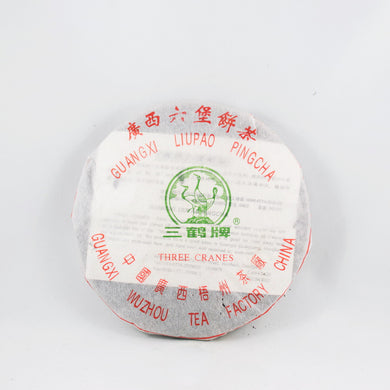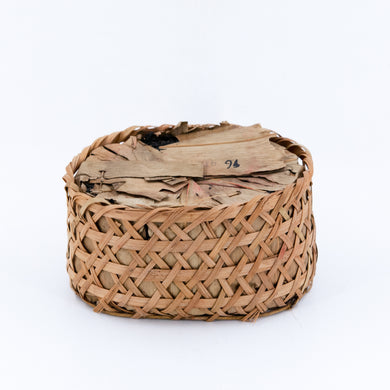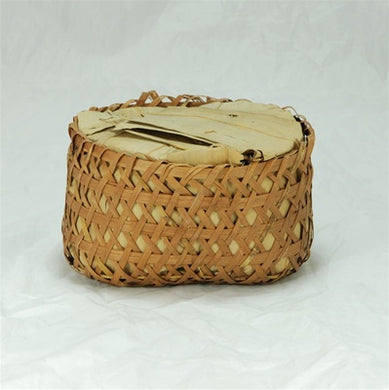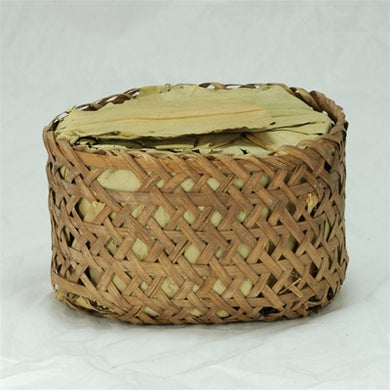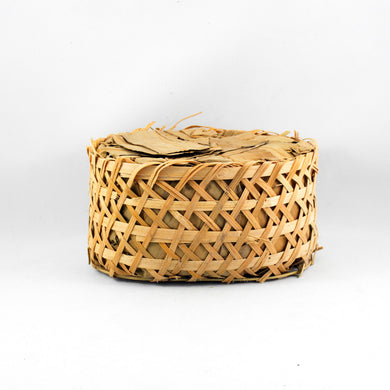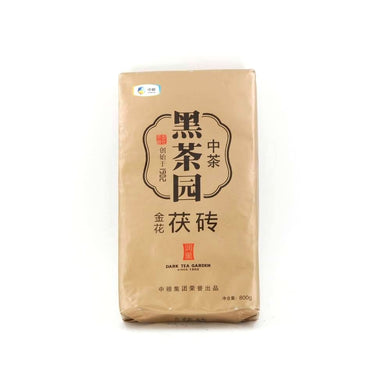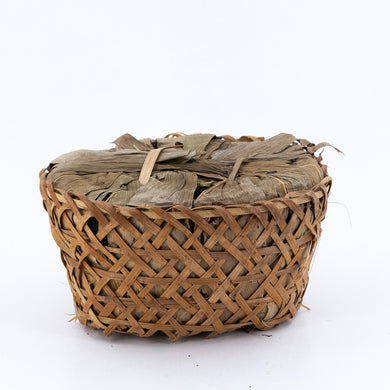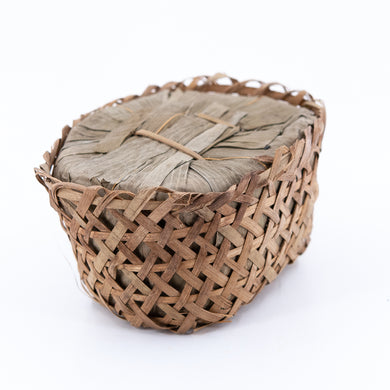



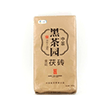
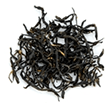


1960 - 1970 Golden Key Zheng Yishun Liu An Tea


This is one of the vintage Liu An teas we acquired many years ago from a local source of the Chinese community.
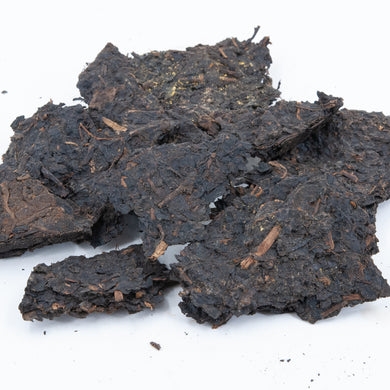
This Golden Key Brand Liu An tea was imported by Le Kiu Importing Co. Ltd to Canada in the 1960s to 1970s. The leaf grade is not particularly high and includes some broken pieces; however, after long-term dry storage in Vancouver, it has developed a rich aged character. The flavor is full and robust, with a stimulating intensity. It has a refreshing tartness reminiscent of dried plum skin. Slight bitterness and astringency with a strong returning sweetness (hui gan).
Zheng Yi Shun dates back to the late Qing dynasty and the early Republican period. This “Golden Key” brand Liu An tea is of relatively lower grade and contains broken leaves. We believe it is likely a reproduction made in the 1960s–1970s, using tea leaves from Guangdong or Fujian.
This tea is especially suitable for tea drinkers who appreciate bold, powerful aged teas. If you prefer a smoother and more mellow aged Liu An, please take note of our other selection.
As a special suggestion: after multiple infusions in a gaiwan or teapot, when the flavor becomes lighter, you can transfer the leaves to a silver kettle or iron kettle and simmer them in water. This will reveal another layer of character and offer a different tasting experience.
More History of Liu An Tea
Liu An tea was once one of the most popular tea varieties in Hong Kong. From the 1950s through the 1970s, it was a staple served in most traditional teahouses.
In Anhui, tea farmers and factories historically focused on producing green and yellow teas for the local market. Basket Liu An tea, however, gained popularity in Guangdong Province, Hong Kong, and throughout Southeast Asia. In general, aged Liu An tea is mellow and gentle on the stomach, with calming and soothing qualities, making it especially favored by the older generation in Hong Kong.
During the War of Resistance against Japan, transportation and distribution routes for Liu An tea was completely cut off, forcing production and sales to cease. The last batch of Liu An tea was produced in 1946, after which production stopped entirely. As a result, Liu An tea gradually faded from the tea world.
In the years that followed, Liu An tea sold in Hong Kong was mainly produced using tea leaves sourced from Yunnan, Guangdong, and Fujian. In 1983, the Overseas Chinese Tea Development Foundation sent a complete basket of antique Sun Yi Shun Liu An tea to the relevant departments of the China Tea Company in Anhui, hoping to revive basket tea production. The Qimen Tea Factory organized a team of specialists to conduct research and carried out trial production in Luxi, southern Qimen. In the 1980s, basket-packed Liu An tea used the China Tea Company’s “Eight Zhong Cha” trademark as its inner label.
* Because we have only a very limited number of baskets in stock, we sell it only in small sizes, so more people can have the opportunity to try this tea.
Tea: 1960 - 1970 Golden Key Zheng Yishun Liu An Tea
Weight Per Basket: 400 grams
Types: Post-fermented
Harvest Period: 1960 - 1970
The Quick Way - 5 Easy Steps
Step 1
Rinse a teapot, small teacups and a small pitcher with hot water.
Step 2
Put one tablespoon of tea leaves in the teapot for every two people being served. Use more for large leaf tea or for a stronger taste.
Step 3
Place the tea leaves inside the teapot and pour in enough hot water to cover the leaves. Pour out the water immediately to rinse the leaves. Use to this chart for proper water temperatures.
|
Green Tea Silver Needle White Teas and most tea made from “tips” |
75C – 80C |
|
Taiwan Oolong Tips Red/Black Teas |
90C – 95C |
|
Black Teas Pu-Erh (Bow-Lay) Te Guan Yin (Iron Buddha) Da Hong Pao (Cliff Tea) Lapsang Souchong Phoenix Oolong Aged White Teas |
95C – boiling |
IMPORTANT NOTES:
- Too much or too little heat for the tea you are making will break down the leaves too quickly or too slowly and the flavour will be inconsistent. Temperatures can be approximate.
- *Boiling means when the water has just reached a slow boil with big bubbles. The Chinese call this “Fish-Eye Water”. For green tea, watch for small streams of tiny bubbles starting to rise from the bottom of the kettle. This is called “Crab-Eye Water”.
- For Oolong teas, the correct temperature is somewhere between these two. If you do not have a thermometer, let the water stand for 2 minutes or so after reaching a first boil to get 90 – 95C C / 194 – 203 F.
Step 4
Empty the teacups and pitcher. Pour enough hot water into the teapot again to cover the leaves. Wait 8 - 10 seconds and pour the tea into the pitcher and serve, a little longer for a stronger taste. For additional brews, repeat Step 4, deducting two seconds for the second brew and adding two seconds for each additional brew.
Step 5
As the aromatic compounds in the tea leaves dissolve in the water, you will notice the subtle flavours of the tea begin to change with each brew. You will be amazed at the difference! To make tea taste even better, try making tea using Gong Fu Cha method, the traditional Chinese art of tea-making.
The Traditional Way Using The Gong Fu Cha Method
You will need:
- Teapot - preferably a small Chinese Yixing teapot. These have the best heat handling properties for tea-making, as well as for developing the flavour. If you only have a large teapot, use the quantities of water as if a small teapot and tea shown on the charts.
- Small teacups (similar in size to Japanese sake cups) or tiny bowls
- Kettle
- Pitcher - small glass or porcelain
- Fine Strainer - to keep your tea clear and free of sediment
- Tea Tray - A cookie sheet or large flat dish lined with a towel can make a good tray to prepare your tea on.
Step 1 - Warm The Teapot and Pitcher, Sterilize The Teacups and Strainer
The first step is to use the right size of teapot for the number of people you are serving. Most teas taste best when made using a Yixing unglazed clay teapot. Use this chart for the correct size of teapot for the number of people you are serving (use this amount of water if you are using a larger teapot). Pour some hot water into the teapot, pitcher, teacups and over the strainer to rinse, warm and sterilize them.
|
Size of Teapot |
Volume (ml / fl oz) |
Number of People Served |
|
#1 size |
70 / 2.4 |
1 - 2 |
|
#2 |
100 / 3.4 |
2 - 4 |
|
#3 |
175 / 6.0 |
3 - 5 |
|
# 4 |
225 / 7.6 |
4- 6 |
Referring to this chart, determine the correct water temperature for the type of tea you are making. Too much or too little heat will break down the leaves too quickly or too slowly and the flavour will be inconsistent. Temperatures can be approximate.
|
Green Tea Silver Needle White Teas and most tea made from “tips” |
75C – 80C
|
|
Taiwan Oolong Tips Red/Black Teas |
90C – 95C |
|
Black Teas Pu-Erh (Bow-Lay) Te Guan Yin ( Iron Buddha) Da Hong Pao (Cliff Tea) Lapsang Souchong Phoenix Oolong Aged White Teas
|
95C – boiling |
* Boiling means when the water has just reached a slow boil with big bubbles . The Chinese call this “Fish-Eye Water”. For green tea, watch for small streams of tiny bubbles starting to rise from the bottom of the kettle. This is called “Crab-Eye Water”.
For Oolong teas, the correct temperature is somewhere between these two. If you do not have a thermometer, let the water stand for 2 minutes or so after reaching a first boil to get 90 – 97C C / 194 – 206 F.
Step 2 – Rinse The Tea Laves
Empty the teapot and pitcher of the warming water. Place the measured amount of tea into the teapot using this chart and fill with the proper temperature water from the chart above. When pouring water in, allow the water to overflow the top of the teapot until the bubbles disappear and the water runs clear.
|
Size |
Size of Leaves |
|||
|
Rolled Leaves |
Less than 1 cm / 3/8 inches |
1 – 2 cm |
2 - 4 cm |
|
|
#1 size |
0.5 - 1 |
0.5 - 1 |
1 – 1.5 |
1.5– 2 |
|
#2 |
1.5 - 2 |
1.5 - 2 |
2 – 2.5 |
2.5 – 3 |
|
#3 |
3 – 3.5 |
3 – 3.5 |
3.5 – 4 |
4 – 4.5 |
|
# 4 |
4 – 4.5 |
4 – 4.5 |
4.5 – 5 |
5 – 5.5 |
This chart shows the amount of tea to use (in number of tablespoons) based on the size of the tea leaves you are using and the size of teapot. Adjust for personal taste.
Replace the lid and immediately pour off all the water (or a bit longer if using compressed tea) and shake out the last drops. Then tilt the lid slightly open on the teapot. This allows the heat in the teapot to escape and not “cook” the leaves so they can retain their aroma
Step 3 –The First Brew
Fill the teapot until the water flows over the top. Place the lid on the teapot and count the proper number of seconds using this chart. Adjust times to taste.
|
|
Rolled Leaves |
Less than 1 cm / 3/8 inches |
1 – 2 cm |
2 - 4 cm |
|
Rinse the leaves |
4 - 8 seconds |
pour off the tea as quickly as possible |
1- 3 seconds |
2 - 4 seconds |
|
First Brew |
10– 15 seconds |
1 – 2 seconds |
9– 12 seconds |
12 – 15 seconds |
|
Second Brew |
8– 13 seconds |
2– 4 seconds |
8– 10 seconds |
10– 13 seconds |
|
Third Brew |
6– 10 seconds |
4– 6 seconds |
6–8 seconds |
8– 10 seconds |
|
Fourth Brew |
4– 10 seconds |
4– 6 seconds |
6– 8 seconds |
8– 10 seconds |
|
Fifth Brew |
6– 12 seconds |
8– 8 seconds |
8– 10 seconds |
10– 12 seconds |
If you have a tea tray, slowly pour a little hot water over the teapot for a few seconds while counting. At the end of the count, pour the tea into the pitcher and tilt the lid open on the teapot. Empty the teacups of the warming water and serve the tea.
Step 4 – Additional Brews
For the second brew, repeat Step 3 until there is no more flavour from the leaves. High quality tea will make many good tasting brews. The taste of low quality tea will start to fade after only a few brews. Believe it or not, high quality tea is usually less expensive to use in the long run than low quality tea, it tastes better and lasts longer!
If the leaves still have some flavour remaining when you finish, you can keep them in the teapot with the lid closed for up to 12 hours. When you're ready to make more tea, just pick up the timing for the next brew where you left off, less a few seconds.
Congratulations!
Congratulations, you are now ready to move on to a more advanced level of tea-making. For full instructions about Gong Fu Cha, see Gong Fu Cha - The Complete Guide To Making Chinese Tea by Daniel Lui)